
FIFA dimensions of a soccer field: Official size, markings, and standards explained
When it comes to soccer, also known as football in most parts of the world, the size of the playing field plays a crucial role in how the game unfolds. The FIFA dimensions of a soccer field are standardized guidelines that ensure fairness and consistency across international matches. Whether you are a player, coach, or fan, understanding these dimensions can enhance your appreciation of the match. Let's explore them together with besoccer.mobi.
Official FIFA dimensions of a soccer field
FIFA (Federation Internationale de Football Association) sets the official laws of the game, including field size. According to FIFA regulations, a soccer field must be rectangular in shape. However, there is some flexibility in its dimensions depending on the level of play.
For international matches, the FIFA dimensions of a soccer field are more strictly defined: Length (touchline) 100 to 110 meters (110 to 120 yards) & width (goal line) 64 to 75 meters (70 to 80 yards).
For non-international matches, the allowable range is broader length 90 to 120 meters (100 to 130 yards), width 45 to 90 meters (50 to 100 yards)
This flexibility allows local leagues and amateur games to adapt to available space while still maintaining the integrity of the sport.
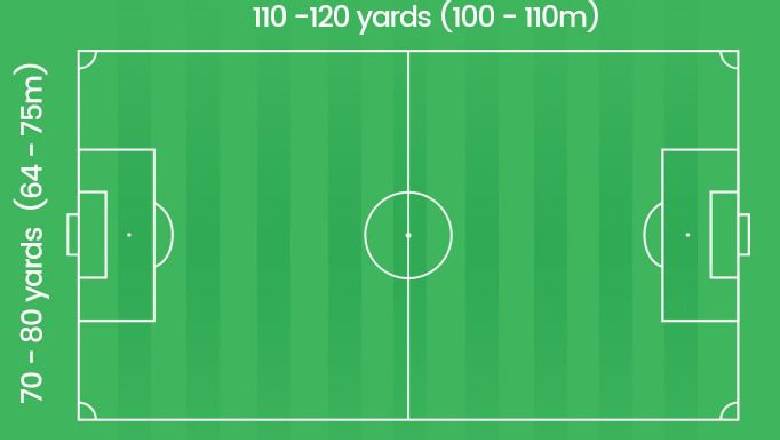
Field markings and key areas
In addition to the overall size, FIFA also specifies precise markings that must appear on the field. These markings are essential for gameplay and officiating.
1. The center circle
Located in the middle of the field, the center circle has a radius of 9.15 meters (10 yards). It ensures that opposing players keep a proper distance during kick-off.
2. The penalty area
The penalty area extends 16.5 meters (18 yards) from the goal line into the field and 16.5 meters on either side of the goal. This is where goalkeepers can use their hands and where fouls result in penalty kicks.
3. The goal area
Also known as the six-yard box, this smaller area extends 5.5 meters (6 yards) from the goal line. It is used for goal kicks and helps organize play near the goal.
4. Corner arcs
Each corner of the field contains a quarter circle with a radius of 1 meter. These arcs indicate where the ball is placed for corner kicks.
5. The penalty spot
Located 11 meters (12 yards) from the goal line, this is where penalty kicks are taken.
Goal dimensions
The size of the goal is also standardized under FIFA rules width 7.32 meters (8 yards), height 2.44 meters (8 feet).
These dimensions remain consistent across all levels of professional soccer, ensuring uniformity worldwide.
Why FIFA dimensions matter
The FIFA dimensions of a soccer field are not arbitrary. They directly impact gameplay, strategy, and player performance. A wider field allows for more expansive passing and wing play, while a narrower pitch encourages compact defensive strategies.
Professional teams often tailor their tactics based on the size of the field. For example, teams with fast wingers benefit from wider pitches, while defensively strong teams may prefer smaller playing areas to limit space.
Variations in stadiums
Although FIFA provides strict guidelines, you may notice slight differences in field sizes across stadiums. This is because FIFA allows a range rather than a fixed measurement. Famous stadiums around the world may have unique dimensions within the allowed limits, adding a subtle home advantage for teams familiar with their pitch.
Youth and small-sided fields
For youth soccer and small-sided games (such as 5-a-side or 7-a-side), the field dimensions are significantly smaller. These variations help young players develop skills more effectively and make the game more accessible. These smaller dimensions encourage more ball touches and faster gameplay.
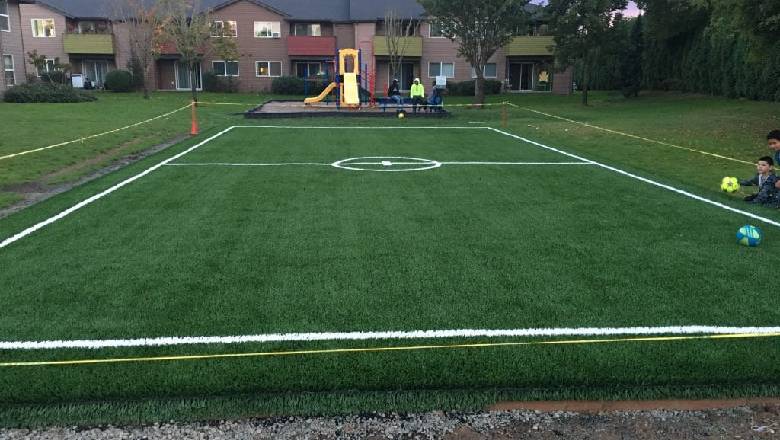
Understanding the FIFA dimensions of a soccer field provides valuable insight into the structure and strategy of the game. From the overall field size to the precise markings and goal dimensions, every detail is carefully designed to ensure fairness and excitement.
Whether you are watching a professional match or playing locally, these standardized measurements help maintain the global consistency that makes soccer the world's most popular sport. We invite you to visit besoccer.mobi to discover more captivating statistics and stories from the annals of football history. In addition to our deep-dive articles, we provide a high-quality, real-time statistics platform for match results and hottest news.
The Most Popular
-
 Most famous Nigerian footballers: Legends who changed African football
 -
 Spain football shirt history: From classic red to modern icons
 -
 Italy biggest loss in football: The heaviest defeats in history
 -
 World Cup winners as player and manager: Legendary figures who made history
 -
 Valverde position in Real Madrid: Tactical role, strengths, and evolution
 -
 How many Puskas Awards does Son have? Full breakdown of his historic achievement
 -
 Top 10 best German midfielders of all time - Icons who dominated the match
 -
 Top 10 the best players in Nigeria 2025: Ranking the super stars
 -
 How much did United pay for Sancho? Full transfer breakdown
 -
 How much did Real Madrid pay for Rodrygo? Full transfer fee, contract và analysis