
Who created Manchester United? The origins and founders of a legendary club
When people think of global football powerhouses, Manchester United is always part of the conversation. With millions of fans worldwide, legendary players, and a rich trophy cabinet, the club’s influence is undeniable. But many fans still ask a simple yet fascinating question: who created Manchester United? Let's explore this together with besoccer.mobi .
Who created Manchester United? The origins of a football giant
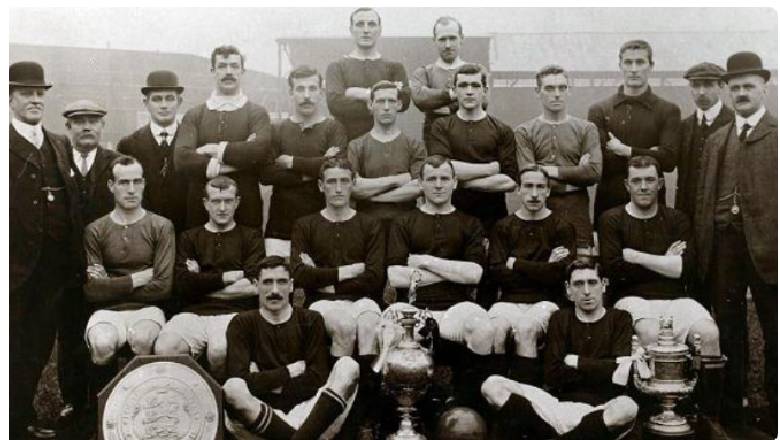
The answer takes us back to the late 19th century, long before the bright lights of the Premier League and iconic nights at Old Trafford. Understanding the origins of Manchester United reveals a story rooted in industry, community, and resilience.
Manchester United was not created by a single individual but by a group of railway workers. The club was originally formed in 1878 under the name Newton Heath LYR Football Club. The team was established by employees of the Lancashire and Yorkshire Railway (LYR) depot in Newton Heath, an area in Manchester, England.
These workers wanted a recreational activity to bring colleagues together, and football quickly became the perfect outlet. In its early days, the team primarily played matches against other railway departments and local clubs.
So, rather than a wealthy businessman or famous athlete, it was ordinary working-class people who created what would eventually become one of the biggest football clubs in history.
From Newton Heath to Manchester United
The transformation from Newton Heath to Manchester United didn't happen overnight. In fact, the club faced serious financial difficulties in the early 1900s. By 1902, Newton Heath was on the brink of bankruptcy.
At this moment, a local businessman named John Henry Davies stepped in. He invested money into the struggling club, helping it avoid collapse. As part of the restructuring, the club was renamed Manchester United Football Club.
This moment is often seen as the true birth of modern Manchester United. Without Davies' intervention, the club might not exist today.
After the club was saved, leadership played a crucial role in shaping its future. One of the most influential early figures was Ernest Mangnall, who became manager in 1903.
Under Mangnall's guidance, Manchester United achieved its first major successes, including winning the First Division title in 1908 and the FA Cup in 1909. These victories helped establish the club as a serious force in English football.
Mangnall also oversaw the move to Old Trafford in 1910, giving the club a permanent and iconic home that remains central to its identity.
Unlike many modern clubs that are built on massive investments and global branding, Manchester United began as a humble team formed by railway workers. This origin story is a key part of the club's identity and explains why it resonates with fans around the world.
Even today, the spirit of unity, resilience, and ambition that defined Newton Heath continues to influence Manchester United.
Key milestones in Manchester United’s early history
To better understand the club's creation and evolution, here are some important milestones:
1878: Formation as Newton Heath LYR Football Club
1892: Entry into the Football League
1902: Financial rescue and renaming to Manchester United
1908: First league title
1910: Move to Old Trafford
Each of these moments played a role in shaping the club we know today.
After its early successes, Manchester United continued to grow in stature. Over the decades, the club would go on to achieve incredible success under legendary figures like Sir Matt Busby and Sir Alex Ferguson.
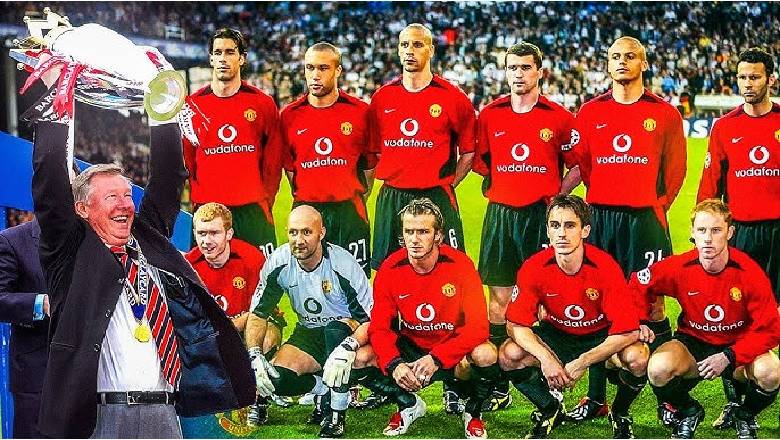
So, who created Manchester United? The answer is both simple and powerful: it was created by railway workers in 1878, not by a single famous figure. Their passion for football laid the foundation for what would become one of the most successful and widely supported clubs in the world.
The transformation from Newton Heath to Manchester United was made possible through community effort, timely investment, and strong leadership. Today, the club stands as a symbol of how humble beginnings can lead to global greatness.
Whether you're a lifelong supporter or a curious football fan, understanding the origins of Manchester United offers a deeper appreciation of its legacy and a reminder that even the biggest institutions can start small. We invite you to visit besoccer.mobi to discover more captivating statistics and stories from the annals of football history. In addition to our deep-dive articles, we provide a high-quality, real-time statistics platform for match results and hottest news.
The Most Popular
-
 Most famous Nigerian footballers: Legends who changed African football
 -
 Spain football shirt history: From classic red to modern icons
 -
 Italy biggest loss in football: The heaviest defeats in history
 -
 World Cup winners as player and manager: Legendary figures who made history
 -
 Valverde position in Real Madrid: Tactical role, strengths, and evolution
 -
 How many Puskas Awards does Son have? Full breakdown of his historic achievement
 -
 FIFA dimensions of a soccer field: Official size, markings, and standards explained
 -
 Top 10 best German midfielders of all time - Icons who dominated the match
 -
 Top 10 the best players in Nigeria 2025: Ranking the super stars
 -
 How much did United pay for Sancho? Full transfer breakdown